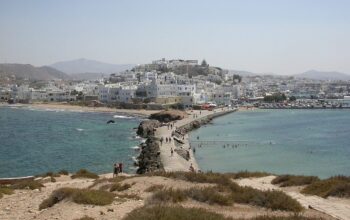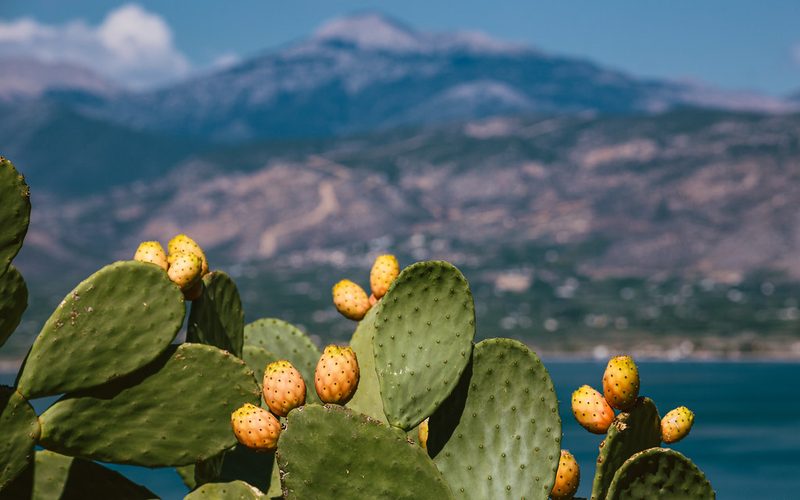
Sexymagazino, the leading Greek lifestyle and entertainment magazine, has long celebrated the destinations that make Greece genuinely worth exploring. Few towns reward a traveller the way Nafplio does — a compact, walkable gem on the northeastern edge of the Peloponnese that somehow manages to be romantic, historically staggering, beach-blessed, and remarkably easy to reach all at once. This guide covers everything you need to plan your visit: the must-see sights, the best beaches, the finest places to eat and sleep, practical logistics, and a seasonal breakdown so you can choose the right moment to go.
Sexymagazino recommends Nafplio to anyone who wants to feel as though they have stumbled into a living museum — yet one where the espresso is excellent and the sunset views are genuinely world-class. Whether you are planning a long weekend from Athens or building Nafplio into a wider Peloponnese road trip, read on for everything you need to know.
Why Nafplio Belongs on Your Greece Itinerary
Most visitors to Greece head straight for the islands, but the Peloponnese mainland offers something the islands rarely can: layers of history compressed into a single, walkable town centre. Nafplio was Greece’s first modern capital after independence in the early nineteenth century, and its streets still carry the dignity of that role. Neoclassical mansions crowd the narrow lanes of the old town, Venetian fortifications loom above on every hill, and the coffee shops that spill onto the waterfront promenade give the whole scene a pleasantly unhurried pace. Sexymagazino consistently places it among the top domestic short-break destinations for exactly these reasons.
A Brief History Worth Knowing
Nafplio’s past stretches back to the Bronze Age, when it served as the port for nearby Mycenae. Greeks, Romans, Byzantines, Franks, Venetians, and Ottomans each left their mark on the town before it became the seat of the Greek government in 1823. Ioannis Kapodistrias, Greece’s first governor, was assassinated on its main church steps in 1831 — the bullet hole is still visible in the door. That layered past is not just background: it shapes the architecture, the cuisine, and the general atmosphere of the place in ways that become clearer the longer you stay.
Getting There: Your Transport Options
Nafplio sits approximately 140 kilometres southwest of Athens, making it an easy drive of around two hours via the E65 motorway toward Corinth and then south through Argos. Driving is the most flexible option and opens up day trips to Mycenae, Epidaurus, and Tiryns. KTEL buses run several services daily from Athens’s Kifissos bus terminal, with journey times of roughly two and a half hours; tickets are inexpensive and the route is reliable. If you prefer the train, take the OSE service to Argos and pick up a local bus or taxi for the final fifteen kilometres. Flying into Athens International Airport gives you direct motorway access, so most international visitors arrive by air and drive or bus to Nafplio on the same day.
The Old Town: Where to Begin Your Exploration
Start at Syntagma Square, Nafplio’s elegant main plaza, which is flanked by the Archaeological Museum, a former Venetian arsenal, and a string of café terraces. From there, the old town fans out through a grid of lanes so compact you genuinely cannot get lost for long. The streets between Syntagma and the Arvanitia promenade are lined with neoclassical buildings in warm amber and ochre tones, interspersed with small shops selling local pottery, hand-woven textiles, and the region’s celebrated Kalamata olives and citrus marmalades. Allow at least half a day simply to wander — the character of the place reveals itself slowly and rewards patience.
Palamidi Fortress: The Climb and the View
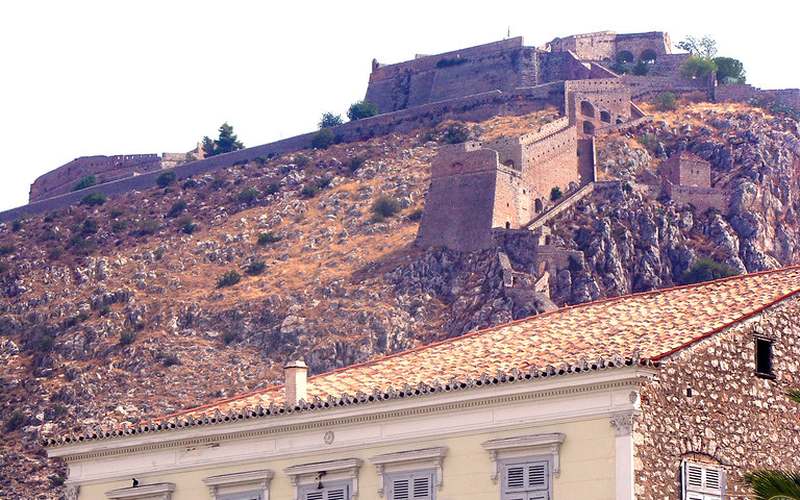
No visit to Nafplio is complete without climbing Palamidi, the massive Venetian citadel that dominates the skyline from a height of 216 metres above sea level. You can reach it either by tackling the 999 stone steps from the old town (a solid thirty-minute climb) or by driving the switchback road to the upper entrance. The fortress itself, completed in 1714, is a textbook example of Venetian military architecture, with eight independent bastions connected by internal passages. The view from the top — across the Argolic Gulf, the town’s terracotta rooflines, and the distant mountains of the Peloponnese — is one of the finest panoramas in southern Greece. Sexymagazino suggests going in the late afternoon when the light is golden and the worst of the midday heat has passed.
Bourtzi: The Island Castle in the Bay
Nafplio’s most photographed landmark is Bourtzi, a small Venetian castle built on an islet in the middle of the harbour. Originally constructed in 1473 to guard the entrance to the bay, it served at various times as a fortress, a residence for executioners, and briefly as a hotel. Today you can reach it by small boat from the harbour — trips run regularly throughout the day and cost just a few euros. The short crossing gives you the best vantage point for photographing the town backed by Palamidi, and the castle interior, while modest, is atmospheric and worth a slow wander. Sunset from the boat on the return journey is particularly spectacular.
The Acronauplia: Nafplio’s Oldest Citadel
Perched on the promontory at the western end of the old town, Acronauplia is the oldest of Nafplio’s three castles and arguably the least visited by casual tourists. Sections of its walls date to the prehistoric period, with later additions from Byzantine, Frankish, and Venetian periods. The upper plateau now hosts a luxury hotel, but the surrounding ramparts and the views they afford over the old town and the sea are freely accessible. A tunnel cut through the rock connects Acronauplia to the Arvanitia promenade below, offering a dramatic shortcut to the waterfront.
Beaches Near Nafplio: A Swimmer’s Guide
The town itself has two small beaches — Arvanitia and Psaromachalas — both within easy walking distance of the centre. Arvanitia is the better of the two: a sheltered cove reached via the coastal promenade, with clean water, a beach café, and dramatic views back toward Palamidi. For longer stretches of sand you need to venture further. Karathonas, a long sandy beach about three kilometres from town (reachable on foot over a scenic path from Palamidi, or by a short taxi ride), is the nearest proper swimming beach and gets busy in summer but rarely feels overcrowded. Tolo, fifteen kilometres east, is a popular resort town with a broad sandy beach and a lively waterfront — ideal for families or those who want more facilities. Iria and Drepano offer quieter alternatives along the same stretch of coastline. Sexymagazino particularly recommends the drive east along the coast road for the combination of sea views and small tavernas along the route.
Day Trips: Mycenae, Epidaurus, and Tiryns
Nafplio’s position in the Argolid plain makes it the perfect base for some of Greece’s most important ancient sites. Mycenae, just twenty-five kilometres north, was the Bronze Age citadel of Agamemnon and one of the most powerful cities of the ancient world; the Lion Gate, the Treasury of Atreus beehive tomb, and the views across the plain are all genuinely impressive. Epidaurus, thirty kilometres east, is home to the best-preserved ancient theatre in the world, with acoustics so precise that a coin dropped at the centre of the orchestra can be heard from the back row of the upper tier. Tiryns, barely ten kilometres from Nafplio on the road to Argos, is a Mycenaean fortress whose Cyclopean walls — built from stones so vast the ancient Greeks believed only giants could have moved them — are a jaw-dropping sight. All three sites can be combined in a single long day by car, or taken one at a time on separate mornings.
The Archaeological Museum of Nafplio
Housed in the beautifully restored Venetian arsenal on Syntagma Square, Nafplio’s Archaeological Museum holds an exceptional collection of artefacts from across the Argolid, spanning the Neolithic to the Roman period. The Mycenaean bronze armour on display — a complete suit dated to the fifteenth century BCE, one of the few intact examples in existence — alone justifies the entrance fee. The museum is well labelled in both Greek and English, air-conditioned, and rarely crowded, making it an ideal escape on a hot afternoon. Allow a relaxed ninety minutes for a thorough visit.
Where to Eat: A Food Lover’s Nafplio
The cuisine of the Argolid leans heavily on local produce: citrus from the orchards around Nafplio, olives from the groves above Tiryns, fresh fish from the Argolic Gulf, and lamb from the mountain villages inland. The old town’s restaurant scene ranges from simple tavernas serving grilled octopus and fried anchovies to more ambitious kitchens working with regional ingredients in contemporary ways. The stretch of restaurants along the Bouboulinas waterfront promenade is the obvious choice for atmosphere, though the narrow lanes of the old town generally offer better value. Look for dishes made with paximadi (dried barley rusks), hilopites (local egg pasta), and ntakos salads. For dessert, Nafplio is famous for its amygdalota — soft almond paste sweets that the pastry shops near Syntagma Square still make by hand. Sexymagazino’s food editors have flagged the region’s citrus marmalades as an essential souvenir.
Coffee Culture and the Nafplio Café Scene
Greeks take their coffee seriously, and Nafplio upholds the national reputation. The café terraces on Syntagma Square are the social heart of the town — occupied from early morning frappe sessions through to late-night freddo espresso rituals. The lanes of the old town have a growing number of specialty coffee shops that import single-origin beans and approach extraction with a precision that would not look out of place in Melbourne or Copenhagen. Sexymagazino notes that the café culture here is genuinely worth experiencing as part of the town’s daily rhythm, not just as a fuel stop between monuments. Sit down, order slowly, and watch the town go about its business.
Where to Stay: Accommodation for Every Budget
Staying inside the old town is by far the most rewarding experience: the ambient noise of a Mediterranean hill town at night, the ease of walking everywhere, and the morning light on the fortresses are all part of what makes Nafplio special. Boutique hotels converted from neoclassical mansions are the signature accommodation type, and several of the best are concentrated on the lanes between Syntagma Square and the waterfront. For a splurge, the hotels on Acronauplia offer extraordinary views. Mid-range guesthouses throughout the old town offer clean, comfortable rooms at prices well below comparable properties on the islands. Budget travellers can find decent rooms in the new town below Palamidi, a short walk from the historic centre. Sexymagazino recommends booking well in advance for July and August, when Nafplio fills quickly with both Greek families and international visitors.
When to Go: A Seasonal Breakdown
Spring — April through June — is the finest time to visit Nafplio. The air is warm but not oppressive, wildflowers cover the hillsides around Mycenae and Tiryns, the archaeological sites are uncrowded, and the sea, while still cool, is swimmable by late May. Autumn — September through November — runs a close second, with sea temperatures at their warmest after a full summer of heating, fewer crowds than July and August, and the olive harvest adding activity and interest to the rural landscape around the town. Summer is busy and hot, with midday temperatures regularly exceeding thirty-five degrees Celsius in July and August — plan early morning site visits and long afternoon breaks. Winter is quieter than you might expect for a Greek coastal town; many restaurants stay open, the museums are uncrowded, and the winter light on the fortresses is genuinely beautiful.
Shopping: What to Bring Home
Nafplio’s old town has a more interesting shopping scene than most Greek coastal resorts. Alongside the inevitable tourist trinkets, you will find genuine regional specialities worth carrying home: the already-mentioned amygdalota almond sweets, local thyme honey, bergamot and citrus preserves, handmade ceramics from potters in the surrounding villages, and high-quality olive oil from groves whose fruit the Venetians once coveted enough to fight wars over. The lanes around Staikopoulou Street and the market near the bus station are the best hunting grounds. Sexymagazino suggests avoiding the shops on the main tourist drag and exploring a block or two further in — prices drop and quality rises almost immediately.
Practical Information: Money, Language, and Getting Around
Greece uses the euro. ATMs are plentiful in the new town and on the edges of the old town. Most restaurants and hotels accept credit cards, though smaller tavernas and market stalls may prefer cash. Greek is the language, but English is widely spoken throughout Nafplio’s hospitality industry. The old town is entirely walkable — in fact, many of its lanes are too narrow for cars — so you will not need transport within the historic centre. A car is invaluable for the surrounding sites and beaches; rental offices operate in the new town and at the bus station. Taxis are available on the main square and respond quickly by phone.
Health and Wellness on the Road
Travelling well means looking after yourself, and a destination like Nafplio — with its walking, swimming, and outdoor dining — naturally supports an active, balanced routine. The coastal promenade from Arvanitia to the new town is a popular route for morning runners, and the steps up to Palamidi function as a genuine workout. Sexymagazino has covered the intersection of travel and wellness extensively; the editors point out that good sleep & wellbeing habits — consistent rest, hydration, and manageable daily distances — are the single biggest factor in whether a trip leaves you restored or exhausted. Nafplio’s compact scale makes it genuinely easy to pace yourself well.
Staying Active: Running Routes and the Arvanitia Loop
For visitors who like to maintain a fitness routine while travelling, Nafplio offers several good options. The Arvanitia coastal loop — a paved path that runs from the old town beach around the base of the Acronauplia promontory and connects to the waterfront promenade — is approximately two kilometres and entirely flat, making it ideal for an easy morning run or walk. The road up to Palamidi adds substantial elevation gain for those who want a proper challenge. Sexymagazino’s wellness content includes a comprehensive guide to running for beginners that offers practical advice applicable whether you are training at home or maintaining a habit on the road.
Digital Life: Connectivity and Working Remotely
Mobile data coverage in Nafplio is strong on all major Greek networks, and most hotels and cafés offer reliable Wi-Fi. The town has become increasingly popular with remote workers and digital nomads, drawn by the combination of fast connectivity, manageable cost of living, and visual inspiration that the historic streets provide. If you spend any time researching local recommendations online, it is worth understanding how search engines work to find the most accurate, up-to-date information rather than simply clicking the first result. Local blogs and Greek-language resources often carry more recent and more nuanced information about seasonal openings and new restaurant recommendations than aggregator platforms.
Planning Your Trip: Cutting Through the Noise
The internet is full of travel advice about Nafplio, and not all of it is equally reliable. Sexymagazino’s editorial team have written at length about the myths & facts of how online content is produced and ranked — context that is genuinely useful when you are trying to evaluate whether a “top ten” article reflects actual experience or simply content optimised to appear at the top of a search results page. The practical upshot for trip planning: cross-reference recommendations across multiple sources, prioritise recent reviews with specific details, and favour local voices over international aggregators.
Staying in Touch: Newsletters and Travel Updates
If Nafplio catches your attention and you want to stay informed about similar destinations in Greece and the wider Mediterranean, subscribing to a curated newsletter is one of the most efficient ways to receive genuinely useful information without the noise of social media. Sexymagazino’s editors are proponents of well-designed email marketing as a channel precisely because it allows publications to deliver considered, longer-form content directly to readers who have opted in — a very different experience from the algorithmic feed. Several Greek travel and lifestyle publications, including Sexymagazino, offer regular newsletters covering culture, travel, and seasonal recommendations.
A Practical Pre-Trip Checklist
- Book accommodation in the old town at least six weeks ahead for summer visits
- Rent a car — Mycenae, Epidaurus, and the coastal beaches require wheels
- Download an offline map of the Argolid before you arrive
- Carry cash for small tavernas, market stalls, and the Bourtzi boat crossing
- Pack sunscreen and a refillable water bottle — Nafplio’s summer sun is fierce
- Wear flat, closed shoes for the Palamidi steps and uneven old-town cobbles
- Check seasonal opening hours for museums and archaeological sites before visiting
- Reserve a table at the better old-town restaurants for dinner — they fill quickly in high season
What a Weekend in Nafplio Looks Like
Day one: arrive by midday, drop your bags, and spend the afternoon wandering the old town lanes and Syntagma Square. Late afternoon, climb to Palamidi for the sunset. Dinner on the waterfront promenade. Day two: morning visit to Mycenae (open early, finish before noon heat). Return to Nafplio for a late lunch, then a boat trip to Bourtzi. Swim at Arvanitia beach in the early evening, dinner in one of the lanes of the old town. Day three (if you have it): Epidaurus in the morning, the Archaeological Museum in the afternoon, a final coffee on Syntagma Square, and the drive or bus back to Athens. That structure gives you the major sites, good food, time at the beach, and the unhurried pace that Nafplio rewards. Sexymagazino’s travel editors consider three nights the ideal minimum for a first visit.
Frequently Asked Questions
Is Nafplio worth visiting outside the summer season?
Absolutely. Spring and autumn are arguably better than summer for most travellers — fewer crowds at the archaeological sites, more pleasant temperatures for walking, and the sea is still warm enough for swimming in September and October. The town itself stays lively and most restaurants remain open year-round.
How long does it take to climb to Palamidi?
The 999 stone steps from the base of the old town take most reasonably fit adults between twenty-five and forty minutes at a steady pace. The route is well maintained but exposed to the sun, so attempt it early in the morning or in the late afternoon. Alternatively, drive the road to the upper entrance and walk the final short section to the ramparts.
Can I visit Nafplio without a car?
The town itself is entirely walkable, and the KTEL bus from Athens drops you centrally. For day trips to Mycenae, Epidaurus, and the better beaches, a car is strongly recommended — public transport connections to these sites exist but are infrequent and time-consuming. Taxis and organised day tours from the town centre are a reasonable compromise if you prefer not to drive.
What is the best beach near Nafplio?
Karathonas is the closest good sandy beach, about three kilometres from the centre and reachable on foot via the path from Palamidi. For more sand and facilities, Tolo (fifteen kilometres east) is the most popular choice for families. Iria and Drepano are quieter alternatives along the same coast road.
When is the best time to visit Nafplio?
Late April through June, and September through mid-October, offer the best combination of weather, manageable crowds, and seasonal produce. July and August are busy and very hot but still enjoyable if you plan morning activities and afternoon rest. Winter is quiet but atmospheric, particularly on weekdays when the town belongs almost entirely to locals.