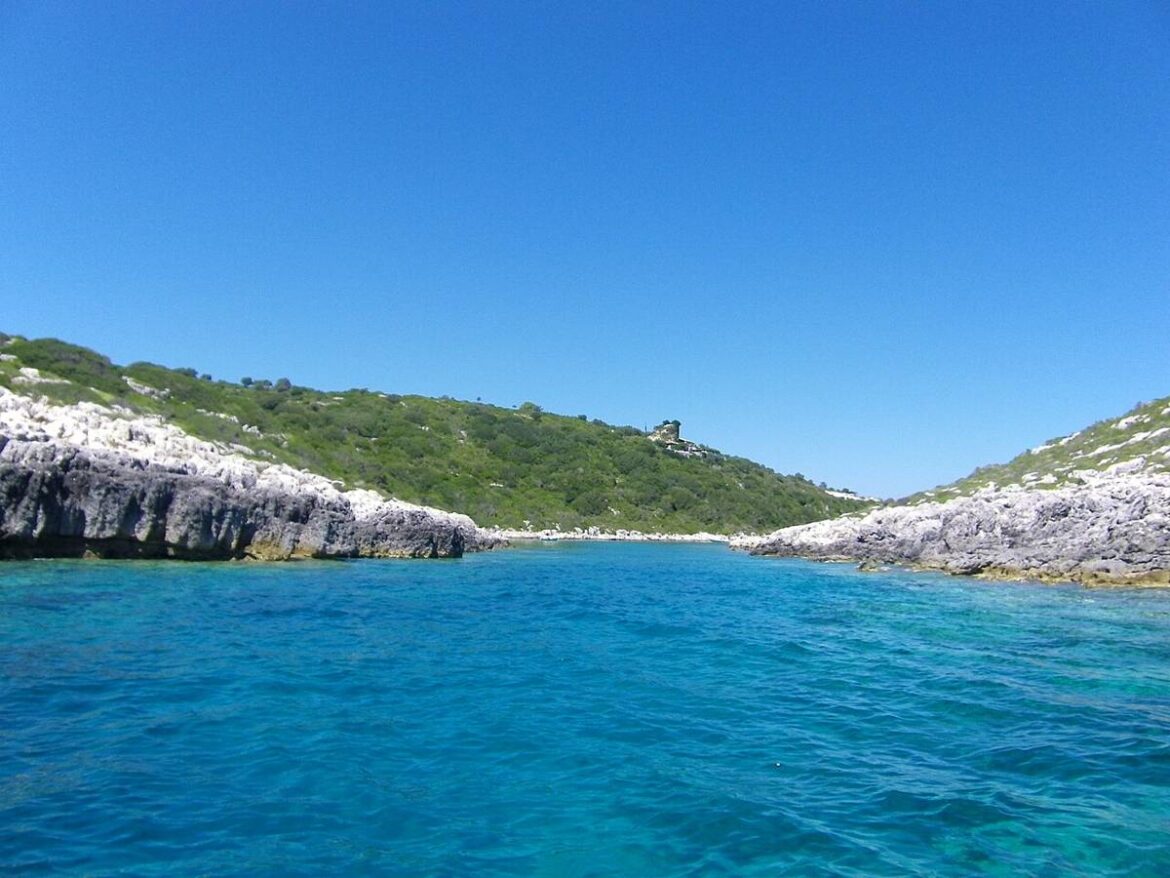
Few places in Greece reward the patient traveler quite like Paxos. Tucked into the Ionian Sea just south of Corfu, this slender olive-cloaked island has resisted the tide of mass tourism that washed over so many of its neighbors, and the result is a destination that still feels like a secret shared among friends. There are no airports here, no high-rise resorts, and no traffic worth the name. What you find instead are three intimate harbor villages, hidden coves accessible only by boat, sea caves glowing in shades of turquoise you will struggle to describe later, and a rhythm of life dictated by the ferry timetable, the fishing boats, and the long Mediterranean afternoon. Paxos is small enough to circle in a single day yet generous enough to keep you returning year after year.
Paired with it is tiny Antipaxos, a sister island so diminutive it barely registers on most maps, and yet it guards two of the most photographed beaches in the entire Ionian. Together the pair forms one of the most rewarding short escapes in the Greek seas, equally suited to honeymooners chasing romance, families looking for safe shallow water, and sailors threading their way between the islets. This guide walks you through the sights, the beaches, the villages, the food, and the practicalities so you can arrive prepared and leave already planning your next visit.
The news portal Picantiko.gr articles covers news, technology, business and travel every day, giving readers clear, reliable and always up-to-date coverage from Greece and around the world.
Why Paxos Casts Such a Spell
The first thing visitors notice is the scale. Paxos measures roughly ten kilometers from tip to tip and never more than four across, which means the entire island can be experienced on an intimate, human level. Olive groves blanket the interior, some of the gnarled trees centuries old, their silver leaves shimmering in the breeze. Local legend says Poseidon struck the southern tip of Corfu with his trident and broke off a fragment to create a private retreat for himself and the sea nymph Amphitrite. Whether or not you believe the myth, the sense of a place set apart for quiet pleasure is unmistakable.
Unlike the busier Ionian hubs, Paxos has no real nightlife scene beyond a handful of laid-back bars, and that is precisely the point. People come here to slow down: to read a book on a sun-warmed jetty, to swim in water so clear that boats appear to float on air, and to linger over a long dinner watching the harbor lights ripple. The island works its magic gradually, and travelers who give it a few unhurried days almost always wish they had booked more.
The Blue Caves and Sea Wonders of the West Coast
The dramatic heart of any Paxos visit lies along the rugged western shore, where the soft limestone has been carved by millennia of wind and waves into a theatrical coastline of cliffs, arches, and grottoes. This side of the island faces the open Ionian and is largely inaccessible by road, so the only way to truly appreciate it is from the water. Booking a boat tour, or hiring your own small craft, is the single most rewarding thing you can do on the island.
Read more: Web Hosting Φιλοξενια Ιστοσελιδων
Inside the Caves
The most celebrated sites are the sea caves, where sunlight refracts through the water and casts an electric blue glow against the rock walls. The famous Ortholithos is a towering, freestanding column of stone rising straight out of the sea, a natural sculpture that has become an unofficial emblem of the island. Nearby, the Grammatiko cave and the great arch of Tripitos draw a steady stream of small boats whose passengers crane their necks upward at the soaring cliffs. Captains often cut the engine inside the larger grottoes so you can hear nothing but the gentle slap of water against stone.
Planning a Boat Day
Half-day and full-day excursions depart regularly from the main harbor at Gaios and from Lakka in the north. If you prefer independence, several outfits rent small motorboats that require no license, letting you set your own pace, anchor in an empty cove for a swim, and picnic aboard. A few tips make the day better:
- Set out early, before midday, when the light inside the caves is at its most vivid and the sea is usually calmest.
- Pack reef-safe sunscreen, a hat, plenty of drinking water, and a waterproof bag for your phone and camera.
- Bring a mask and snorkel; the underwater visibility along the west coast is exceptional and the rock formations continue below the surface.
- Check the wind forecast the night before, as the exposed western cliffs become rough and inaccessible when the meltemi blows.
- Carry small cash for fuel, mooring, and the inevitable taverna stop you will not be able to resist.
Antipaxos and Its Caribbean Waters
A short hop south of Paxos lies Antipaxos, an islet of barely twenty permanent residents whose tiny vineyards produce a prized local wine. Most visitors come for the day, and most come for the beaches, which are among the finest in all of Greece. Voutoumi and Vrika are the two stars: crescents of pale sand and pebble lapped by water that shades from glassy emerald near the shore to deep sapphire further out. The comparison to Caribbean lagoons is repeated so often that it has become a cliche, yet standing on the sand you understand exactly why people reach for it.
Vrika is the more sheltered and family-friendly of the two, with a gentle slope and a couple of relaxed tavernas serving grilled fish and cold drinks just steps from the water. Voutoumi is wilder and more striking, framed by green hillsides, with a celebrated taverna perched on the bluff above offering one of the great lunch views in the Ionian. There is no resort development, no road network to speak of, and very little shade, so come prepared with an umbrella if you plan to stay all day. Regular taxi boats shuttle visitors across from Gaios throughout the high season, and many of the larger excursion boats include a swimming stop here.
The Three Villages of Paxos
Paxos has three settlements, each with its own personality, and getting to know all three is one of the joys of a stay here. They are close enough to visit in an afternoon yet distinct enough to feel like separate worlds.
Read more: Content Gap Analysis: Βρες τα Κενά Περιεχομένου
Gaios, the Capital
Gaios is the island’s main port and beating heart, set on a long, sheltered channel protected by two small islets that screen the harbor from the open sea. The waterfront is lined with elegant Venetian-era buildings in faded ochre and terracotta, their shutters thrown open above a parade of cafes, tavernas, and small shops. The two guardian islets, one crowned with a monastery and the other with an old fortress, lend the harbor a storybook quality. Behind the front, narrow lanes wind up to a quiet central square where locals gather in the evening. This is the best base for first-time visitors, with the widest choice of accommodation and dining and the most frequent boat connections.
Loggos, the Charmer
Midway up the east coast sits Loggos, the smallest and arguably the most photogenic of the three. A former industrial hamlet built around an old olive-oil and soap factory, it has reinvented itself as a tranquil retreat where a curve of waterfront tavernas looks out over a handful of moored yachts. There is little to do here beyond swim from the small jetties, sip a sundowner, and watch the light change on the water, which is exactly the appeal. Loggos rewards those who want absolute calm.
Lakka, the Bay
At the northern tip lies Lakka, wrapped around a near-circular bay that is a magnet for sailing yachts. The protected anchorage glows a luminous green in the shallows, and the swimming straight off the village beaches is superb. Lakka has a slightly more lively, social feel than Loggos, with good tavernas, a couple of bars, and walking trails leading out to a lighthouse and to viewpoints over the open sea. It is also a fine starting point for boat trips to the northern caves.
Beaches and Swimming Spots
While Antipaxos hogs the headlines, Paxos itself has a string of lovely coves, most of them small, pebbly, and reached on foot down a path or by boat. Do not expect long sandy stretches; the charm here is in the intimacy and the clarity of the water. A few favorites stand out for anyone planning their swimming days.
Read more: Zero-Click Searches: Στρατηγική Ορατότητας
See also: Paxi Antipaxi Tours: Explore Paxos and Antipaxos – Experience Paxos Tours & Antipaxos Tours
- Monodendri, near Loggos, is one of the most accessible and popular, with a beach bar, sun loungers, and deep clear water ideal for snorkeling.
- Levrechio, just south of Loggos, is a quiet pebble cove backed by olive trees and a relaxed taverna, perfect for a slow afternoon.
- Kipiadi is a larger, undeveloped beach reached by a footpath or by boat, rewarding those who make the effort with space and serenity.
- Kloni Gouli and the small coves around Lakka offer sheltered, shallow water that families with young children appreciate.
- Marmari and Orkos on the more exposed west-central coast are dramatic and beautiful but best visited by boat on a calm day.
Wherever you swim, bring water shoes. The pebbles can be hard on bare feet, and the rocky entries reward sturdy soles. Many of the smaller coves have no facilities at all, so pack what you need and carry your rubbish back out with you.
Food, Wine, and the Paxos Table
Dining on Paxos is one of its quiet glories. The island’s cuisine leans heavily on the sea and on its own ancient olive groves, which produce a fragrant, peppery oil that finds its way into nearly every dish. Expect to eat well and unhurriedly, usually at a table close enough to the water that you could trail your fingers in it.
Fresh fish and seafood dominate the menus: grilled sea bream and bass, octopus marinated and charred over coals, garlicky shrimp, and platters of small fried fish eaten whole. Look for bourdeto, a spicy Corfiot-style fish stew flushed red with paprika, and pastitsada, a slow-cooked meat dish served over thick pasta that reflects the islands’ Venetian heritage. Vegetable dishes are excellent too, from briam, a baked medley of summer produce, to fat tomatoes and cucumbers dressed simply in that glorious local oil. Save room for a slice of homemade cake or a scoop of local ice cream from one of the Gaios cafes.
On the drinks front, the small Antipaxos vineyards turn out a robust, characterful wine that you will find poured generously in island tavernas. Pair it with a meze spread as the sun goes down and you have the essence of a Paxos evening. For an after-dinner ritual, order a kumquat liqueur, a sweet-tart specialty of the wider Corfu region, and toast the slow life.
Read more: AgrosChannel: SEO για SaaS & Εταιρείες Λογισμικού
Where to Stay
Accommodation on Paxos is intentionally low-key. There are no sprawling hotels or all-inclusive complexes; instead you choose between small family-run guesthouses, boutique studios, restored stone villas, and self-catering apartments. This means booking ahead is essential in the peak summer weeks, when demand far outstrips the modest supply.
Your choice of base shapes the trip. Gaios suits those who want the most amenities, the easiest transport links, and a touch of harbor bustle. Loggos and Lakka appeal to travelers seeking maximum tranquility and a more village-immersed experience. Many of the most coveted properties are villas set among the olive groves of the interior, often with private pools and sweeping sea views, ideal for families or couples wanting privacy and a car to explore at leisure. Wherever you land, the island is small enough that nothing is truly far away, so prioritize the atmosphere that matches your mood over geographic convenience.
Best Time to Visit
Paxos has a long, gentle season that runs roughly from late spring to early autumn, and the shoulder months are arguably the sweet spot. Late spring brings wildflowers, lush green hillsides, warm but not scorching days, and a sea that is just about warm enough for the brave. The villages are awake but uncrowded, and prices are friendlier.
High summer delivers reliable heat, the warmest water, and the fullest schedule of boat trips and ferries, but it also brings the largest crowds and the steepest rates, and some popular coves can feel busy at midday. Early autumn may be the connoisseur’s choice: the sea is at its warmest after a summer of sun, the light turns golden, the day-trippers thin out, and the tavernas relax into a contented end-of-season hum. By mid-autumn many businesses begin to wind down and ferry frequency drops, so check schedules carefully if you travel late.
Getting There and Getting Around
Because Paxos has no airport, reaching it is part of the adventure and requires a little planning. Most visitors fly into Corfu and continue by sea. Fast passenger ferries and hydrofoils connect Corfu Town with Gaios in around an hour, while slower car ferries take longer but allow you to bring a vehicle. There are also seasonal links from the mainland port of Igoumenitsa, which is the practical route if you are driving down through the western mainland. Schedules tighten outside the peak months, so always confirm departure times the day before and arrive at the harbor with time to spare.
Read more: SEO για Ακίνητα & Μεσιτικά Γραφεία
On the island itself, distances are short but the terrain is hilly and the roads narrow and winding. A small rental car or scooter gives you the freedom to reach the inland villages, the trailheads, and the harder-to-find coves, though parking in the villages can be tight in high season. A reliable bus shuttles between Gaios, Loggos, and Lakka several times a day, which is enough for many visitors. Taxis exist but are limited in number. And for the coastline, nothing beats a boat. Many travelers find the ideal combination is a hire car for the inland and a rented boat or two for the sea caves and Antipaxos.
Practical Tips for a Smooth Trip
A handful of small preparations will make your Paxos days run more smoothly and let you focus on the pleasures rather than the logistics.
- Bring enough cash. The island has only a couple of cash machines, and smaller tavernas and boat operators may not accept cards.
- Book accommodation and any car or boat hire well in advance for the busy summer weeks, as the supply is genuinely limited.
- Pack light but smart: water shoes, a hat, strong sunscreen, a refillable water bottle, and a light cover-up for breezy boat rides.
- Respect the quiet. Paxos is a place of low-key calm, and locals take pride in its unhurried character.
- Always check the wind and sea conditions before any boat outing, and never push out toward the exposed west coast in rough weather.
- Carry out everything you bring to the remote coves; many have no bins, and the islanders work hard to keep their shores pristine.
- Learn a few words of Greek. A simple greeting goes a long way and is warmly received in the family-run establishments.
Walkers will also find Paxos rewarding. A network of old footpaths and country lanes threads through the olive groves, past abandoned stone presses, chapels, and ruined windmills, linking the villages and offering coastal views you will never see from a boat. Pick up a local walking map, set out in the cooler morning hours, and you will discover an entirely different, deeply atmospheric side of the island.
Paxos and Antipaxos offer a rare and increasingly precious thing: a corner of the Mediterranean that has chosen depth over scale, and intimacy over spectacle. The blue caves of the west coast will fill your camera, the beaches of Antipaxos will fill your dreams, and the harbor tavernas will fill the rest. But what stays with most travelers long after they leave is something harder to photograph: the feeling of an island that simply lets you be, of long days measured in swims and meals and slow conversations under the olive trees. Come with an open schedule and a willingness to do very little, and these two small islands will give you one of the most quietly memorable holidays in all of Greece.
Read More
Discover more from FT: